
Challenges to the Dominant Political-Economic Model of Liberal Democracy
Thursday, February 19, 2026
Challenges to the Dominant Political-Economic Model of Liberal Democracy
By Clara Danzl
Introduction:
Francis Fukuyama’s claim on “the end of history” before the end of the Cold War states that liberal democracy had emerged and was uncontestably the final form of the political-economic government model. Thirty years later, this statement seems to be prematurely made. As the current liberal democratic model is facing a crisis of unparalleled scope, while at the same time it is seeing a rise of authoritarian capitalism and the erosion of democratic norms. This essay explores how the neoliberal economic model that dominated the post-1990s has contributed to both scopes of this crisis, whilst also analysing the limits of existing theoretical frameworks in order to understand contemporary political shifts.
This essay is divided into four parts. The first part constitutes of the demonstration on how the rise of authoritarian capitalist states, especially China and Russia, have compromised the theory that economic development naturally produces liberal political institutions. Second, it analyses the internal destabilisation of liberal democracies through the rise of nationalism, populism, and democratic backsliding, showcasing how these factors emerged from contradictions within neoliberal capitalism itself. The third pard examines the crisis that the political left are facing; being caught between neoliberal economic clashes and the rise of right-wing politics. Fourth, this essay critically utilises both Fukuyama’s “end of history” thesis and Samuel Huntington’s “clash of civilisations” framework, claiming neither adequately demonstrate the complexity of contemporary politics.
Part One: The Rise of Authoritarian Capitalism:
China’s Challenge to Liberal Assumptions
The most notable external challenge to liberal democracy derives from China’s model of authoritarian capitalism. China’s journey precisely contradicts modernisation theory’s prediction that market integration and economic development would only occur with political liberalisation. Alternatively, the Chinese Communist Party (CCP) has shown over a span of more than four decades extraordinary economic spur, while still maintaining, and even strengthening, authoritarianism.
China’s triumph demonstrates that revolutionary market economies, technological advancement, and global economic integration can coexist with one-party rule and widespread state control. China actively exports a model, by providing infrastructure, technology, and financing alongside political norms that emphasize sovereignty and stability over human rights and democracy, through initiatives like the Belt and Road (BRI). For developing countries enraged by slow democratic processes or Western conditionality, China seems to offer an attractive alternative: a promise of fast development without political changes required by liberal institutions.
Russia and Authoritarian Nationalism
Russia presents us a different variant of authoritarian capitalism; one rooted more in resource wealth and the identity of civilisation rather than developmental success. Under President Vladimir Putin, Russia has managed to merge democracy with assertive nationalism, creating a hybrid regime and positioning itself as a preserver of traditional values and sovereignty against what the country portrays as Western imperialism.
Whilst Russia’s economic scale cannot match China’s, its influence in geopolitics remains considerable. Through information warfare, cyber operations, and growing support for nationalist movements across Europe and North America, Russia actively tries to destabilise liberal democracies. More importantly, Russia’s model shows that authoritarian systems can become appealing to those beyond their borders, especially to those whose views on globalisation converge with threats to national identity and cultural autonomy.
The Broader Picture on Authoritarian Capitalism
Beyond China and Russia, various hybrid regimes across Southeast and Central Asia, and the Middle East combine market economics with authoritarian politics. These systems vary greatly in their specifics, but they all collectively challenge the legitimacy of liberal democracy that appeared safe in the 1990s. These nations demonstrate that authoritarianism can provide certain advantages, stability, economic growth, and pride, which matter to many citizens, particularly in countries where liberal democracy is linked to instability, inequality, and foreign intervention.
Part Two: Internal Factors to Democratic Erosion:
The Transformation of Liberal Democracy
To understand internal crises of liberal democracies requires us to examine how neoliberal policies reshaped political systems from the 1980s onward. Neoliberalism is characterised by DLP policies, deregulation, privatisation, and liberalisation. Austerity, flexible labour markets and free trade did not simply change economic policy, rather it transformed political rationality itself, undermining democratic deliberation, strengthening market logic and repositioning citizens as consumers and entrepreneurs.
The neoliberal era witnessed a notable convergence between centre-left and centre-right political parties. Historically social democratic parties that were known for fighting for labour rights, welfare expansions, and state interventions, strategically adopted key neoliberal principles. Tony Blair’s “Third Way” and Bill Clinton’s “New Democrat” agenda demonstrate this change, keeping some social programmes while embracing financial liberalisation, welfare reforms and less state intervention in market economy. Meanwhile, centre-right parties implemented certain welfare elements while further pushing for marketisation.
The Erosion of Social Foundations
The postwar “golden age” of capitalism (1945-1973) relied on regulated markets, strong labour forces, and expansions of welfare systems. These arrangements did not solely provide material security but also the social factors that sustained democratic legitimacy. However, in the beginning of the 1980s this compact eroded as union member numbers declined, social programmes faced cuts, and inequality drastically increased. Liberal democracy’s social foundations crumbled, leaving room for the rise of populist movements.
The Populist Response
Current populism emerged from the direct contradictions of neoliberal capitalism. Economic insecurity, cultural fear, and social dislocation fuelled resentment towards political establishments. Populist leaders like Donald Trump, Viktor Orbán, Marine Le Pen, Giorgia Meloni, and Jair Bolsonaro exploit this resentment through anti-elite rhetoric that resonates with voters who do not feel represented by mainstream parties. They use social media to bypass gatekeepers, spread misinformation, and build alternative realities that alienate supporters from contradictory evidence. Furthermore, contemporary populists use popular cultural concerns, such as immigration, national identity, and religion to fuel intolerance, xenophobia, and polarisation to win voters.
Democratic Backsliding
Populism’s most alarming feature currently is its ability to undermine democratic values from within. Hungary under Viktor Orbán provides a clear example: weakened judiciary, media control, academic attacks and the rise of “illiberal democracy”. Other countries, such as Poland and turkey have followed comparable paths.
Even long-established democracies show signs of vulnerability. The January 6, 2021, Capitol storming in the United States, an attempt to prevent the outcome of a democratic election, exposed fragility in the world’s oldest constitutional republic. Additionally, Brexit demonstrated how nationalist movements can dismantle institutional arrangements. Furthermore, across Europe, far-right parties have made ideologies once considered beyond the pale normal, shying away mainstream discourse.
The Crisis of Multilateralism and Nationalism
Modern nationalism has weakened the multilateral institutions that supported the post-World War II liberal order. Eurosceptic movements persistently challenge the European Union. World Trade Organisation’s dispute settling mechanism has been paralysed. The United Nations struggle with competition from superpowers and declining influence. Even NATO, despite being revitalised following Russia’s invasion of Ukraine, faces doubt about American commitment and European responsibility-sharing.
This nationalist turn showcases real grievances on globalisation’s uneven distributions and deficits in democratic international institutions. Yet, it also undermines the cooperative structures necessary for addressing cross-border issues, such as, climate change, pandemics, or financial instability. This results in a vicious cycle: weakened institutions drive nationalist resentment, leading to further institutional weakness.
Part Three: The Crisis of the Left:
The Political Left’s Dilemma
The left struggles to contain liberal democracy’s issues. Historically, known for representing the interests of the working class, welfare expansions, economic distribution, and replenishing labour rights. Yet, during the neoliberal era, the left fundamentally modified its political landscape.
Deindustrialisation and declining unions made it so left-wing parties lost their base voters. Now, many industrial workers show right-wing populist parties their support as they address national identity and cultural concerns more that centre-left parties which adopted neoliberal economic positions. Economically struggling regions across Europe and North America swung sharply towards nationalist populism.
At the same time, the left embraced socially progressive causes, such as gender equality, LGBTQ+ rights, and environmental policies, who appeal to educated, cosmopolitan people, but alienate conservative working-class voters. This creates a dilemma: the lefts economic centrism does not differentiate from centre-right parties, however its socio-cultural progressive agenda appeal to one demographic but alienates other voters who might support economic redistributive policies.
Economic Alternatives and their Implications
The left faces a crisis, trying to find successful economic alternatives to neoliberal capitalism. Policy options are constrained by international institutions’ fiscal rules, and globalised capital mobility. When left-wing governments seek to implement redistributive programmes or financial regulations, they are confronted with credit rate downgrades, capital flight, and pressure from international organisations.
The Right’s Response
Right-wing populists have successfully used, a traditionally know left-wing, anti-elite rhetoric. Through combing economic nationalism, cultural conservatism, and welfare chauvinism (considered social programmes to the “real” national community), right-wing parties attract working-class voters who feel mistreated by economic and cultural changes. Their promise of protecting jobs, restricting immigration, and defending traditional values, address both fears.
This puts the left in an undesired position: sharing economic policies with the centre-right whilst the populist right takes over anti-establishment sentiments. The traditional left-right divide has fractured and been replaced by more complex alignments shaped around globalisation, national identity, and cultural norms that do not fit naturally along economic principles.
Part Four: Theoretical Application:
Failure of “The End of History”
Fukuyama’s thesis captured 1990s optimism but failed to see the authoritarian’s resilience and liberal capitalism’s flaws. We can currently observe intense renewed ideological rivalry between governance models, both claiming to offer fitter solutions to challenges.
The authoritarian’s return to great power, the crisis of social democracy, democratic backsliding, and the rise of illiberal democratic movements clearly challenge the assumption that liberal democracy is the final form of politics history. Additionally, Fukuyama did not anticipate how neoliberal globalisation would lead to economic disruptions and social shifts.
Furthermore, his thesis assumed a universal appeal to liberal democracy. However, contemporary times shows us otherwise: many value economic stability and growth, and preservation of national identity as much or over human rights and democracy, especially when liberal democracies fail to deliver security and social cohesion.
Limitations of “The Clash of Civilisations”
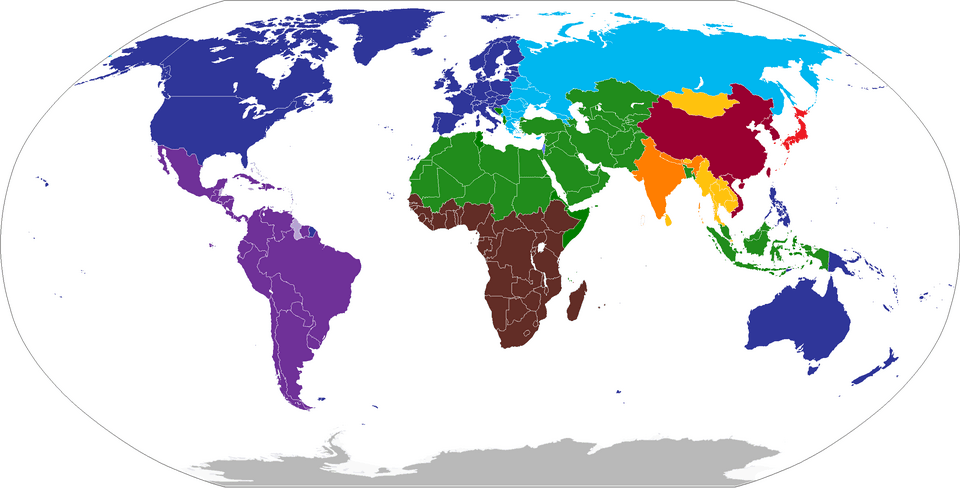
Huntington’s model appears relevant to some current conflicts: West-China tensions, cultural nationalism in Europe, Islamist militancy, or Russia’s rhetoric on civilisations. Yet, it ultimately oversimplifies complex realities and do not explain key phenomena.
The “clash of civilisations” framework overlooks intense internal conflicts, such as divisions inside the West or within the Islamic world. It also fails to explain Western populism and democratic erosion, both which stem from internal economic and social contradictions rather than inter-civilisational clashes.
Moreover, his framework treats civilisations as unified and coherent, ignoring hybrid identities, transnational movements, and coalitions in contemporary politics. Current authoritarian leaders worldwide, from Orbán to Putin to Duterte and Bolsonaro, share common strategies and offer mutual support across boundaries.
Toward a More Complex Perspective
The current crisis requires frameworks that merge multiple dimensions: the tensions and contradictions of neoliberal capitalism, the geopolitical rivalry between various governance models, the cultural and identity-based fears sparked by rapid social shifts, and the technological transformations which reshape political communication and mobilisation.
Neither linear progress toward liberal democracy nor rigid civilisational conflict manages to fully capture this complexity. Instead, we see a fluid and competitive environment where political systems coexist, blend, and challenge one another. Authoritarian and democratic regimes learn from each other’s successes and failures. Ideological, economic, cultural, and technological forces intersect in ways that resist simple labels.
Conclusion:
Liberal democracy is confronted by a deep multidimensional crisis. Authoritarian capitalist powers challenges from outside, showing that alternative governance models can generate economic growth and national power. Internally, neoliberal capitalism undermined the economic security and social cohesion that once sustained democratic legitimacy, leading to an increase in populist and nationalist movements. Alternatives provided by the political left struggle as they are weakened by ideological division and structural constraints.
This showcases it is not a temporary shock but a structural turning point. The future of liberal democracy relies on its capacity to address the socio-economic injustices, rebuild trust in democratic institutions, and build a model that balances market efficiency with social justice.
Several scenarios are plausible. Either reforms that address inequality and reconstruct democratic pluralism; continued decline, sliding toward hybrid regimes that maintain elections but hollow out democracy; or sustained competition between models, liberal democratic, authoritarian capitalist, and hybrid, with no single system being a clear winner.
What is clear is that the post-Cold War consensus has collapsed. Liberal democracy’s fate will be determined, by political choices, institutional reforms, and whether democratic societies are capable to address their own contradictions whilst upholding core values against both internal and external challenges, in the next few decades to come.